









Super Mario Bros.
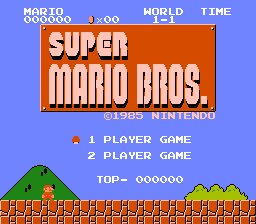
Starting at the beginning (ish), is the game that introduced us to the world of the Mushroom Kingdom, Goombas, Koopa Troopas, Princess Toadstool, Mushroom Retainers, and the black magic wielding turtle-dragon Bowser. It was fantastical, with colourful graphics, interesting enemies and characters, unique game mechanics, diverse terrain, power ups, catchy music, and oh, absolutely solid gameplay and level design. The fluidity of Mario’s movement and the sophistication of his physics set this game apart and made it a landmark. It inspired everything else on this list to come and countless other games.
Finely tuned and well thought out, everything in this compact game earned its spot – nothing is out of place, nothing is superfluous. Playing this as a young child, it was like going on a journey. I was underground, in the sky, underwater, I was a hero, I would fall and pick myself back up and try again; it formed my gamer identity. I have fond memories of playing the game with I still revisit this game regularly. The progression of the early levels, when and how elements are revealed to you, is a master class of game design in the way it eases in a new player to its world and structure. It is an early glimpse into the genius of Shigeru Miyamoto. Super Mario Bros. is endlessly fun, refined, and timeless.
Super Mario All-Stars + Super Mario World
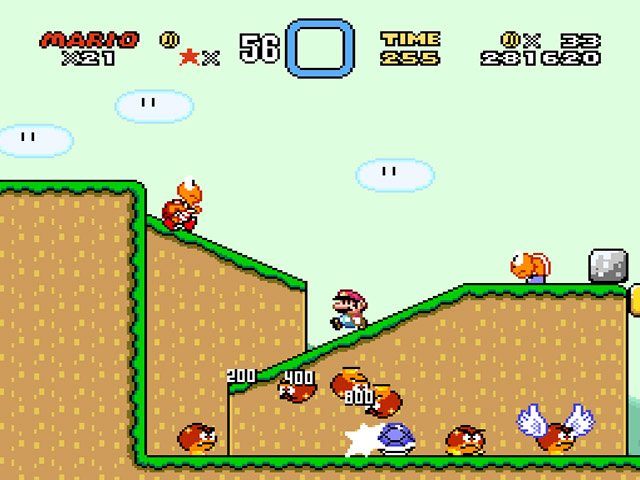
Alright, so I’m cheating here to save some space. But, really, you’d be hard pressed to argue that this five game mega cartridge isn’t one of the finest Mario releases. Nintendo expanded the Super Mario All-Stars compilation further in later releases for the West to also include Super Mario World.
Of the early core Mario games, Super Mario World is, in my mind, the definitive Mario game. It may even still be the greatest 2D Mario platformer to me. It has the approachability of the original NES game, with the exaggerated Mario-ness of Super Mario Bros. 3, now with some 16-bit trickery, a slightly more refined power-up system, deeper levels, and the addition of Yoshi.
It’s all a bit more exciting, a bit more challenging, a bit more visual, a bit more frantic, a bit more colourful, with more levels (96 exits!!), wilder enemies, new sound, new friends, and flooded with more hidden secrets. It builds upon the groundwork of all that came before it, and refines it, especially Super Mario Bros. 3.
Adding Yoshi to the mix seriously alters the way you play. You can abandon Yoshi for some extra leverage in a failed jump, but more practically, he grants Mario some much needed defence. Coupled with the hovering item storage box, you can plan ahead, equip yourself, and be well prepared for your adventure. Moreso than in previous Mario games, it feels like you can move purposefully and aren’t so much flying by the seat of your pants.
A game about a flying plumber that rides a dinosaur should only serve to fill you with immense joy, and this game does. Every time I revisit this game, I am beyond pleased. From the flood of nostalgic memories, to the later levels I didn’t get to experience as a kid; to the mischievousness of the Forest of Illusion, to the fun of discovering hidden levels, to the variety present in the Koopaling battles, the memorable soundtrack, the novelty of a skull raft lava lift, to jumping about with goggle-sporting dolphins. Everything in this game just comes together flawlessly.
The game forever remains excellent, fresh, and fully featured, with deep gameplay and refined level design.
As for the rest of this compilation release, I am going to say this right now, but Super Mario Bros. 2 USA is not on my list here individually. Nor is Super Mario Bros.: The Lost Levels. And, get your pitch forks ready, neither is the beloved Super Mario Bros. 3.
I do enjoy these games; they are essential plays, (The Lost Levels to a lesser extend, mind you) but to me they are not complete in a standalone form. I first played these games in this Super NES remake collection. So, for me, these SNES versions hold that necessary element of nostalgia-steeping that classic Mario games imprint on to players. The games look alive with vibrant backgrounds, while the NES versions look cold and sterile. Koji Kondo’s iconic music has been enhanced for the 16-bit era by Soyo Oka. Admittedly, I don’t hold this opinion for the original Super Mario Bros. – largely because I played it on NES first.
With revamped character designs, graphics, detail, environments, and music, All-Stars is a look at these classic games with a pair of rose-coloured glasses. Super Mario Bros. 2 and Super Mario Bros. 3 especially shine in this port. Here they are definitive and provided the basis for later versions on the Game Boy Advance. Super Mario Bros. 3 in particular is now just oozing Mario-ness, and Super Mario Bros. 2 really highlights the aesthetic of being in a far away and different land.
In short, these are terrific and must-play games that have been given a loving makeover: already great games, made even better. This collection of ports is a Mario extravaganza.

Nintendo’s Mobile “DNA”

Animal Crossing: New Leaf Review

Great feature!
Super Mario 64, Paper Mario, and Mario Kart 8 are my favourites.